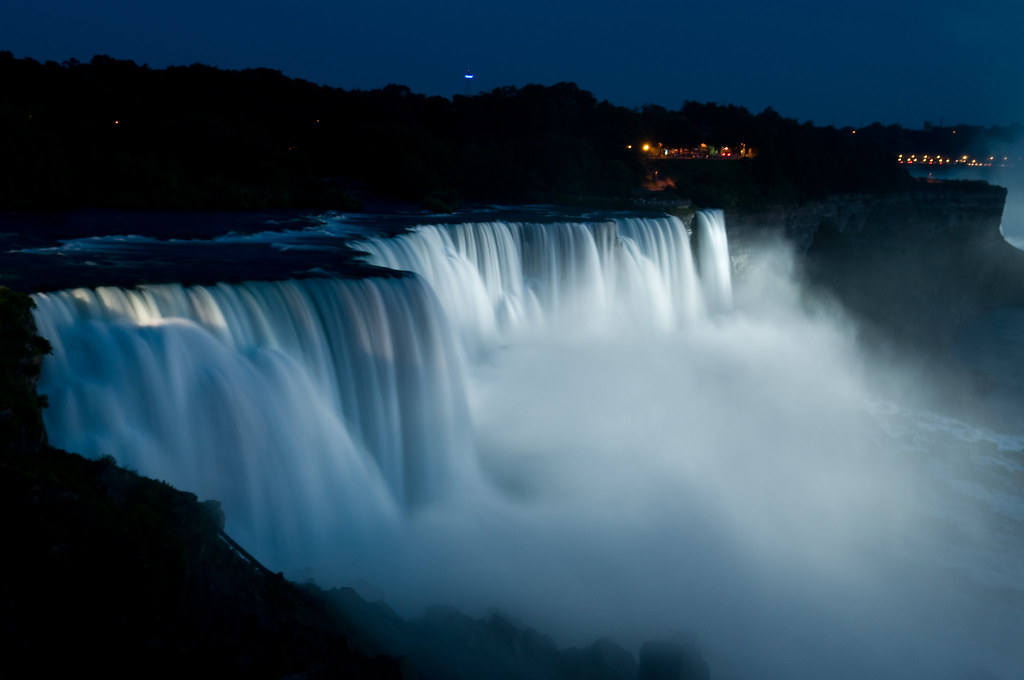
Niagara Falls is not only one of the great wonders of the world, but a piece of history; both natural and supernatural. The falls, which are actually made up of three different waterfalls, are over 12,000 years old, and its waters hold memories of all of the people that have touched it. Its name is derived from the word Ongiara, which originates from local indigenous languages of the Haudenosaunee. While there’s some debate on its exact origin, most agree that it means ‘thundering waters.’
The Maiden of the Mist
My first job as a teenager was working at the Maid of the Mist boat tours. While many visitors thought that the name was just a name given to the boats, it actually comes from an old Haudenosaunee legend about a young indigenous maiden named Lelawala, who was canoeing down the Niagara River, when she either lost her paddle, or fell from the canoe entirely. She went over the waterfall, but instead of dying she was saved by He-no, the god of thunder, who lived behind the waterfall. Some stories say he allowed her to live in his watery domain, delivering messages from the human world, while others believe they fell in love. Regardless, the legend goes that on especially misty mornings, some people claim to see the beautiful indigenous maiden in the mists below the falls.
While I personally never saw Lelawala’s spirit, getting to be so close to such a powerful force of nature is a truly spiritual experience. It’s easier to believe a thunder god lives behind the waterfall when you’re a small person looking up at a nearly 200-foot waterfall with millions of gallons of water falling down around you.
Barrels and Daredevils
Most people that visit Niagara Falls have heard the story of Annie Edson Taylor, a 63-year-old schoolteacher who was the first person to go over the waterfall in a barrel and survive. That started a long trend of daredevils attempting to copy or even outdo the stunt and leading to several tragedies.
In July of 1920, Charles Stephens attempted the stunt, going over the waterfall in a wooden barrel. When it was eventually retrieved from the waters below, only his arm was found inside. The rest of him was never recovered, likely trapped under the rocks beneath the surface of the waterfall.
George L. Statakis also went over in a barrel and survived the initial stunt, only to suffocate inside of the barrel after it became trapped behind the waterfall for over 14 hours. That sounds like a truly horrific way to go.
Robert Overacker attempted to ride a jet ski over the falls in 1955. Rather than trying to set a record or pure thrill seeking, he did this stunt to raise awareness for the rising homelessness epidemic. Unfortunately, the parachute on his jet ski failed to open, resulting in his death.
Thankfully in recent times, Canadian and US authorities have implemented crushing fines to disincentivize these dangerous, and often deadly stunts.
Suicides
While Niagara Falls is a place of stunning natural beauty, it has been known to be the site of choice for those that wish to end their own lives. Because of the millions of gallons of water going over the falls every second, and the hidden rocks below, no one knows how many people take their own lives and are never found. The US and Canada estimate between 20 to 30 people end their lives this way every year.
While my summers working at the falls were full of fun and memories, I remember the tense silence that would settle over all of the workers when we had to pause the boat rides as a Coast Guard jet boat circled the horseshoe, searching for something in the water.
Case Evidence: Voices and Footsteps
Type: Witness
While closing up in the evenings on several occasions, especially near the stairway that leads up the side of the Bridal Veil Falls, over the constant thundering of the water, sometimes I could just barely hear faint whispering. It was too clear to be the tourists still taking pictures above, and there were no other workers around me. It was unsettling, but also sad since I knew the most common cause of death for people there.